
Is Your Suspension Wearing Out? 5 Signs Columbia Drivers Should Know
Your vehicle's suspension does much more than provide a comfortable ride. It helps keep your tires connected to the road, supports proper steering and handling, and helps your vehicle remain stable when braking or turning.
That's
why suspension problems can be easy to overlook at first. A little extra
vibration, an occasional clunk, or uneven tire wear might not seem like a major
concern. But these symptoms can point to worn or damaged suspension components
that deserve attention.
For
Columbia drivers, suspension components deal with plenty of daily demands.
Commuting through town, navigating changing road conditions, driving on
highways, and dealing with potholes and uneven pavement can all contribute to
suspension wear over time.
Components
such as tie-rod ends, ball joints, control arms, shocks, struts, and steering
knuckles can eventually require inspection or service.
At
Columbia CDJRF, we want to help you recognize the warning signs before a small
suspension issue becomes a larger repair. Whether you drive a Chrysler, Dodge,
Jeep, or Ram, here are five signs that your suspension may need professional
attention.
1. Excessive Play or Vibration in the
Steering Wheel
Your
steering should feel controlled and responsive. If you notice excessive
movement in the steering wheel before the vehicle responds, or you feel a
persistent shake while driving at higher speeds, your suspension or steering
components may need inspection.
The
Problem:
Worn tie-rod
ends are one possible cause. These components connect the steering system
to the wheel assembly and allow the wheels to respond when you turn the
steering wheel. As they wear, unwanted movement can develop within the joint.
Other
steering or suspension components can produce similar symptoms, so a proper
inspection is important before assuming the tie-rod ends are the cause.
The
Solution:
A
technician can check the steering and suspension for excessive movement and
inspect the relevant joints and connections. If worn tie-rod ends are found,
replacement may be necessary. Because steering components can affect wheel
geometry, an alignment may also be recommended after the repair.
2. Uneven, Feathered, or Cupped Tire Wear
Your
tires can provide some of the earliest clues that something is wrong with your
suspension.
Take a
look at your tread from time to time. If one edge is wearing noticeably faster
than the other, or you see scalloped or cupped sections around the tire, the
problem may involve your suspension, steering, wheel alignment, or tire
balance.
The
Problem:
Worn
suspension bushings, control arms, ball joints, or other components can allow
the wheel to move outside its intended position. This can change the tire's
contact with the road and contribute to irregular wear.
A
damaged steering knuckle can also affect wheel positioning. Because
several problems can create similar tire-wear patterns, replacing a tire
without finding the underlying cause may not solve the problem.
The
Solution:
A
professional suspension system inspection can help identify worn or
damaged components. If a suspension component is found to be out of
specification, it may need to be repaired or replaced before an alignment is
performed.
Addressing
the underlying issue can help restore proper wheel geometry and prevent
unnecessary tire wear.
3. Excessive Nosediving When Braking
Your
vehicle naturally shifts some of its weight toward the front when you brake.
However, if the front end noticeably dives toward the road during braking, it
could be a sign that your shocks or struts aren't controlling vehicle movement
as effectively as they should.
This can
be particularly noticeable during sudden stops in traffic or when approaching
an intersection.
The
Problem:
Shocks
and struts help control the movement of your vehicle's springs and suspension.
As they wear, they may become less effective at controlling weight transfer and
keeping the vehicle stable.
Leaking
hydraulic fluid around a shock or strut can also indicate that the component
needs attention.
The
Solution:
A
technician can inspect the shocks or struts for leaks, physical damage, and
signs of excessive wear. If replacement is necessary, shocks and struts are
often replaced in pairs on the same axle to help maintain balanced handling.
Because
braking problems can also produce stability concerns, suspension symptoms
should not be confused with an actual brake-system problem. If your vehicle is
showing multiple braking symptoms, have the entire system inspected.
4. Torn Boots, Cracked Bushings, or Other
Visible Damage
Sometimes,
the warning signs of suspension trouble are visible before they become
noticeable behind the wheel.
Many
suspension and steering components use rubber boots and bushings to protect
joints and absorb movement. Age, road debris, temperature changes, and normal
wear can cause these components to crack or deteriorate.
The
Problem:
A torn
grease boot on a tie-rod end or ball joint can allow dirt and moisture
to enter the joint while grease escapes. Once contamination gets inside, the
joint can wear more quickly.
Cracked
or deteriorated suspension bushings can also allow excessive movement between
components.
The
Solution:
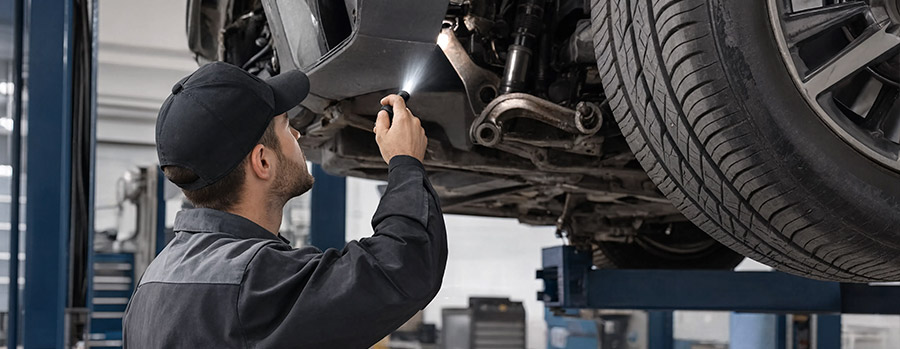
During avisual inspection of suspension components, a technician can look for
torn boots, cracked bushings, leaking shocks or struts, damaged mounting
points, and other signs of deterioration.
If a
protective boot is damaged but the joint itself remains in good condition, the
appropriate repair will depend on the component and vehicle. If excessive play
or internal damage has already developed, replacement of the affected component
may be required.
Regular
inspections can help identify these problems before they contribute to larger
suspension or steering issues.
5. A Clunking or Popping Sound From the Front
End
Not
every suspension problem announces itself through steering or tire wear.
Sometimes, your vehicle simply starts making a noise.
If you
hear a clunk, knock, or popping sound when turning at low speeds, driving over
uneven pavement, or entering a driveway, don't automatically assume it's just a
loose piece of trim.
The
Problem:
Several
suspension and steering components can produce front-end noises when they
become worn. Ball joints, control-arm bushings, stabilizer-bar links, strut
mounts, and other components can all create noises when there is excessive
movement.
A
damaged steering knuckle can also contribute to suspension problems,
although the cause should be confirmed through a proper inspection rather than
assumed from the noise alone.
The
Solution:
A
technician can inspect the front suspension and steering components for
excessive movement, damaged hardware, worn joints, and other potential sources
of the noise.
Finding
the source early can help prevent additional wear and restore the controlled,
predictable handling you expect from your Chrysler, Dodge, Jeep, or Ram.
The Bottom Line for Columbia Drivers
Your
suspension works behind the scenes every time you turn the wheel, accelerate,
brake, or drive over uneven pavement. That makes it easy to take for
granted—until something starts to feel or sound different.
A
steering wheel that feels loose, tires wearing unevenly, excessive body
movement during braking, visible rubber damage, or an unexplained front-end
clunk can all be reasons to schedule an inspection.
Ignoring
these symptoms doesn't necessarily mean a major failure is around the corner,
but it does mean an underlying problem could continue to develop without
attention.
Whether
you're driving a Jeep SUV, a Dodge performance vehicle, a Chrysler sedan, or a
Ram truck, proper suspension maintenance helps support predictable handling,
tire performance, and ride quality.
If you
notice changes in the way your vehicle steers, rides, or handles, let the
factory-trained team at Columbia CDJRF take a closer look. Columbia
CDJRF provides suspension repair and replacement services for drivers in
Columbia and surrounding communities.
Schedule your CDJR suspension inspection or service at Columbia CDJRF and keep your vehicle ready for the roads around Columbia and beyond.